

by Martin Serra,
Culture Ops Co-Founder.
CULTURAL SIGNALS: THE GEOGRAPHY OF BELONGING
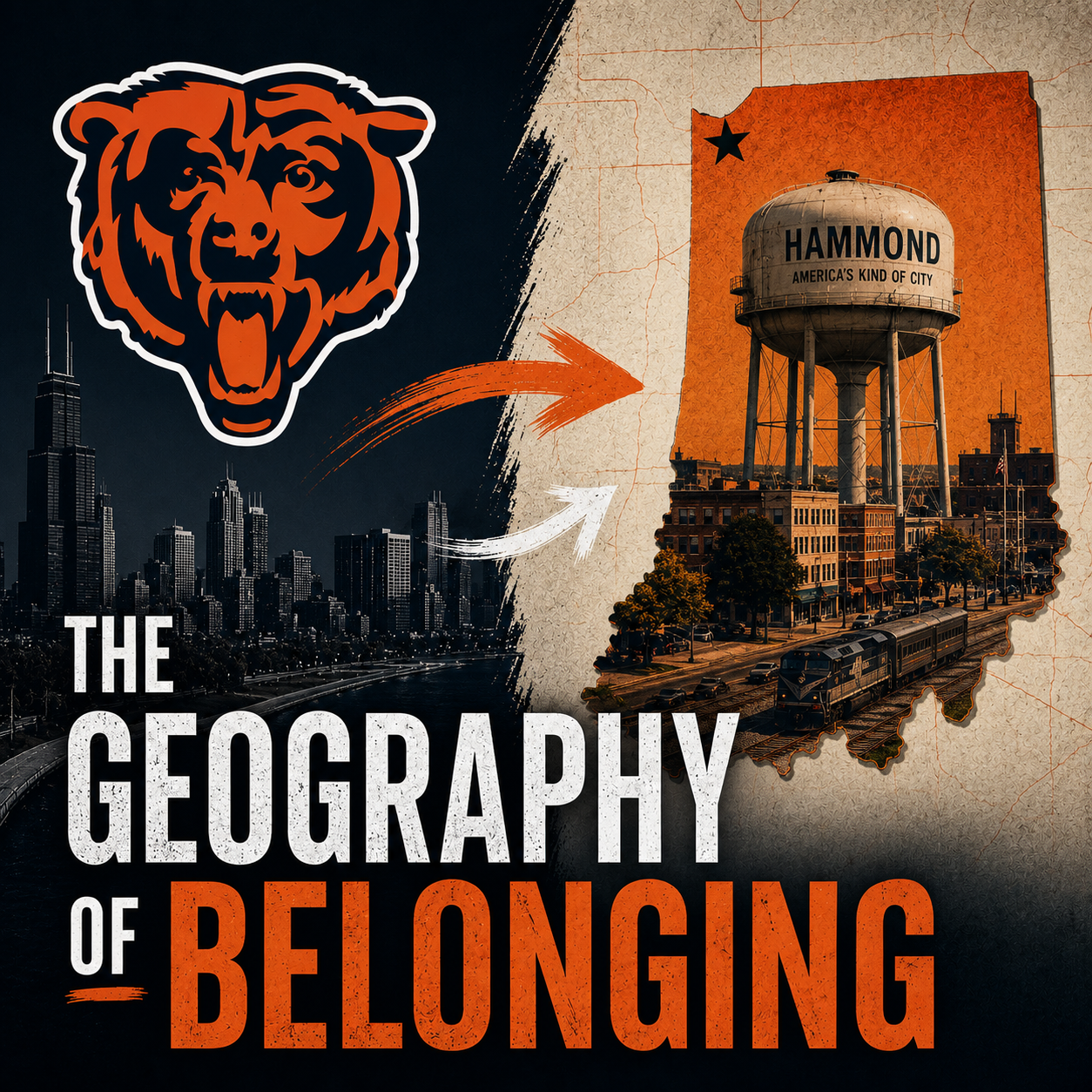
Most people are asking the wrong question about the Chicago Bears potentially moving to Indiana. The question isn't whether fans will follow. They will. The more interesting question is why. Because what we're really witnessing isn't a stadium story. It's a culture story. And it reveals something much larger about how identity works in modern America.
For decades, sports franchises were inseparable from place. Teams represented cities. Cities represented communities. Communities created culture. The relationship felt permanent.
The Chicago Bears belonged to Chicago. The Green Bay Packers belonged to Green Bay. The New York Yankees belonged to New York. But over the last twenty years, something fundamental has changed.
For most of modern history, community was something you inherited from where you lived. Increasingly, community is something you choose.
People work remotely, shop online, build friendships through digital platforms, and participate in communities that have nothing to do with their ZIP code. Sports may be one of the clearest examples of that shift.
If the Bears ultimately move across the state line into Indiana, many fans will be angry. But most won't. Not because they agree with the move. Because the team no longer lives where the stadium is.
The team lives where the meaning is.
The Bears aren't a building. They're decades of memories, traditions, rituals, and emotional investment. The relationship was never with the stadium. It was with what the team represented. That's why franchise relocations often create outrage without creating the mass abandonment people predict. Fans aren't buying tickets. They're maintaining identity. Fans don't support teams because of stadiums. They support teams because those teams become part of how they see themselves. The Bears aren't competing for attention. They're competing for a place inside people's identities.
We've seen versions of this before. The Raiders moved from Oakland to Los Angeles and then to Las Vegas. The Rams left St. Louis for Los Angeles. The Jets and Giants play in New Jersey despite carrying New York in their names.
Yet fans continue showing up. Not because geography doesn't matter. Because geography is no longer the primary source of belonging.
Culture is.
The real risk for the Bears isn't leaving Chicago. The real risk is appearing to leave Chicago. Because people can forgive a change of address.
What they struggle to forgive is the feeling that an institution no longer represents them.
That's the difference between relocation and abandonment.
If fans feel ownership is abandoning the culture, traditions, and identity that made the franchise meaningful, the damage becomes emotional rather than logistical. And emotional damage is much harder to repair. Businesses are dealing with the exact same challenge.
Brands are redesigning stores, changing headquarters, consolidating offices, moving manufacturing, and replacing physical experiences with digital ones.
Leaders often focus on operational efficiency while underestimating cultural consequences.
A headquarters relocation doesn't upset people because of an address. It upsets them if it signals abandonment. A rebrand doesn't fail because of a logo. It fails when people believe the company is rejecting part of its identity.
That's why some creators now have stronger communities than billion-dollar institutions. That's why digital-first brands can compete against legacy giants.
But beneath that shock is a larger truth.
Communities are no longer defined solely by geography. They are defined by shared meaning. In other words, community is becoming less about where we are and more about what we believe belongs to us. The organizations that thrive won't necessarily be the ones closest to their communities. They'll be the ones that remain most connected to them. We live in a world where institutions are increasingly portable. Companies can relocate, teams can relocate. Universities can expand globally. Creators can build audiences anywhere. But human beings still want to belong somewhere. That's why the Bears story resonates far beyond football. It forces us to confront a larger question:
In a world where organizations can move almost anywhere, what responsibility do they still have to the communities that made them matter in the first place?
If the Bears leave Chicago but remain culturally Chicago, most fans will stay.But if they leave the culture that made them Chicago, no stadium will save them.