

by Martin Serra,
Culture Ops Co-Founder.
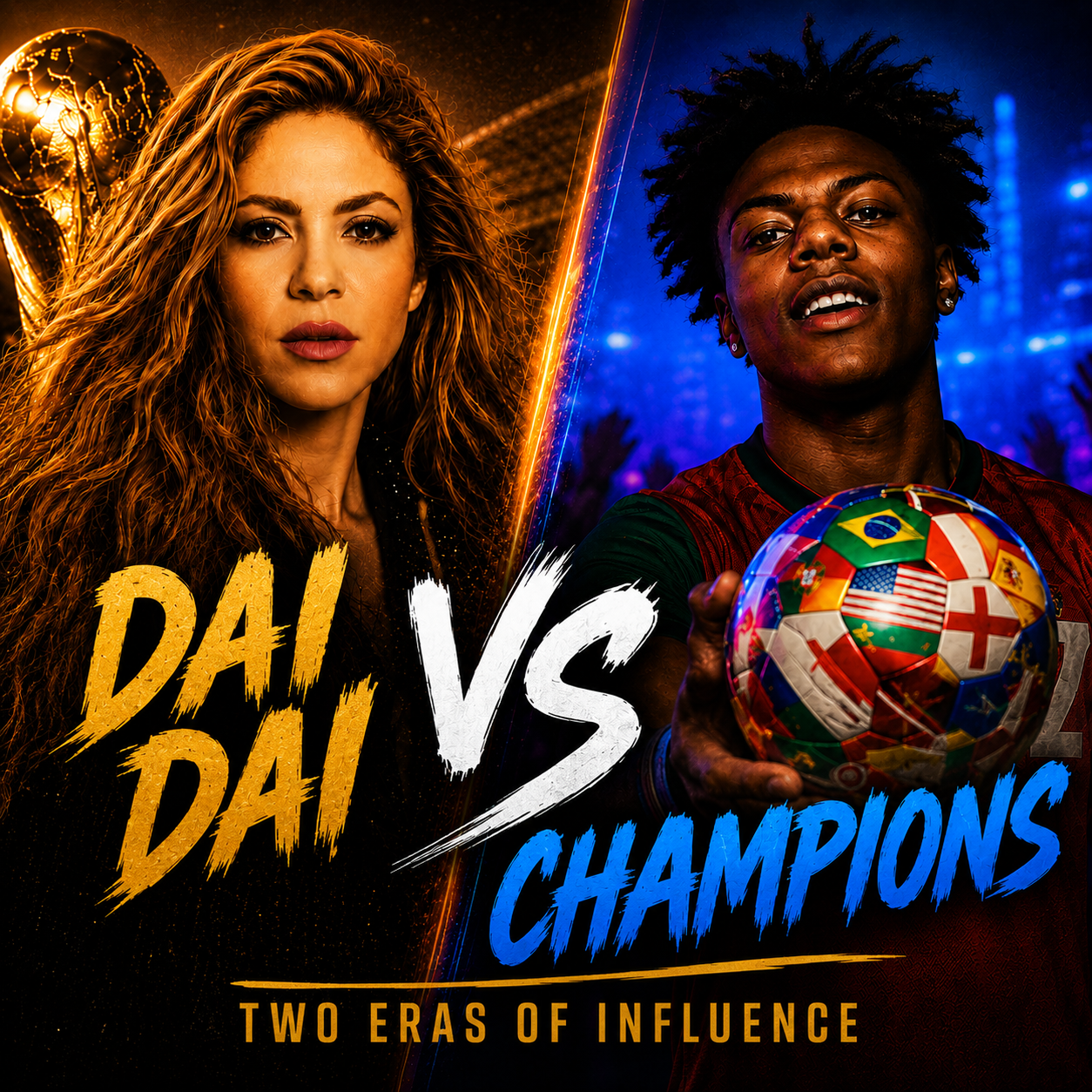
CULTURE SIGNALS: DAI DAI vs CHAMPIONS. TWO ERAS OF INFLUENCE
The most interesting thing about the World Cup isn’t soccer anymore. It’s culture.
Every four years, the tournament becomes one of the biggest cultural stages on Earth. Music, fashion, creators, brands, memes, language, identity, nationalism, fandom, and internet behavior all collide into one global moment.
And this year, something fascinating happened. We got two very different versions of what a “World Cup anthem” looks like. One from Shakira. One from IShowSpeed.
And whether people realize it or not, the gap between them says everything about where culture is heading.
Shakira’s approach represents the traditional model of global cultural production. Massive polish. Stadium energy. Carefully engineered crossover appeal. A global Latin superstar designed to unify audiences through spectacle, rhythm, and broad emotional accessibility. It’s the FIFA version of culture.
Controlled. Produced. Institutional. Safe enough to travel globally. And historically, it worked.
Songs like “Waka Waka” weren’t just songs. They became cultural timestamps. They felt universal because they were designed to feel universal. Big chorus. Big visuals. Big emotional optimism. The formula was about creating a shared global moment.
But Speed’s version operates completely differently. It doesn’t feel institutional. It feels native. Messy. Loud. Hyperactive. Memeable. Internet-first. Built from fandom instead of choreography. And that distinction matters more than people think.
Because younger audiences today don’t always connect through polished perfection anymore. They connect through participation. Through chaos. Through personality. Through creators who feel emotionally available rather than professionally untouchable.
Speed’s version feels less like a campaign and more like the internet talking to itself in real time. That’s a massive cultural shift.
For years, brands believed cultural relevance came from proximity to celebrity. Today, relevance increasingly comes from proximity to community behavior. That’s why creators often outperform traditional celebrities in engagement, influence, and emotional resonance. They don’t feel manufactured by the system. They feel embedded inside the audience itself.
Shakira performs for the crowd. Speed feels like he came from the crowd. That difference changes everything. And this isn’t about age. It’s about cultural operating systems.
One approach is built for broadcast culture. The other is built for algorithmic culture.
Broadcast culture optimized for scale. Algorithmic culture optimizes for reaction, remixability, and emotional immediacy.
One says: “Here is the anthem.” The other says: “Come participate in the moment.”
That’s why so many brands still misunderstand younger multicultural audiences. They continue producing polished “culture-inspired” work while audiences are increasingly rewarding cultural participation instead of cultural observation.
Today, culture moves horizontally. Not top-down. Communities create meaning faster than institutions can package it. And that’s uncomfortable for brands because it means they can’t fully control the narrative anymore. The real lesson here isn’t whether Shakira or Speed generated a better song. It’s that they represent two completely different eras of influence.
One built around mass-media authority. The other built around community-powered relevance. And the truth is, the future probably belongs to brands smart enough to understand both.
Because the next generation of cultural leadership won’t come from simply producing louder campaigns. It will come from understanding how people actually participate in culture now. Not as audiences. But as collaborators.